Table Of Content
He shows progress with each submission as he imagines what these homes could be. Before he is known as the designer of impressive historic revival homes, Williams is acknowledged by his peers as a master of the small house. The first English settlers in the North End built their houses along the waterfront, and from the earliest days depended a great deal on the sea to make their living. Numerous church spires rose above the houses that lined the streets, and the squares were filled with the sights and sounds of a busy English commercial town.
Paul Revere Williams House
The 1,610 square-foot single-family house at 333 Westmoreland Drive in Ewing has been sold. The transfer of ownership was settled in April and the total purchase price was $360,000, $224 per square foot. A sale has been finalized for the detached house at 876 Revere Ave. in Trenton. The price was $320,000 and the new owners took over the house in March.
of the Best Historic Sites in Washington D.C.
The two riders met Adams and Hancock in Lexington and enabled the revolutionaries to avoid arrest. Paul Revere did not gain immediate fame for his April 1775 "Midnight Ride." In fact, it wasn't until Henry Wadsworth Longfellow's 1861 poem, which greatly embellished Revere's role, that he became the folk hero we think of today. Before going to The Paul Revere House, please see its Before You Arrive page for more information on visiting the historic home.
Visiting Paul Revere House
His work was well regarded during his lifetime and is highly prized today. Revere lived in his North End home on and off for 30 years as his family continued to evolve. After the death of his wife, Sarah, in 1773, he married Rachel Walker and they had eight additional children. Amid the growing political tensions in Boston, Revere continued to strengthen his roots in the colonial harbor city.
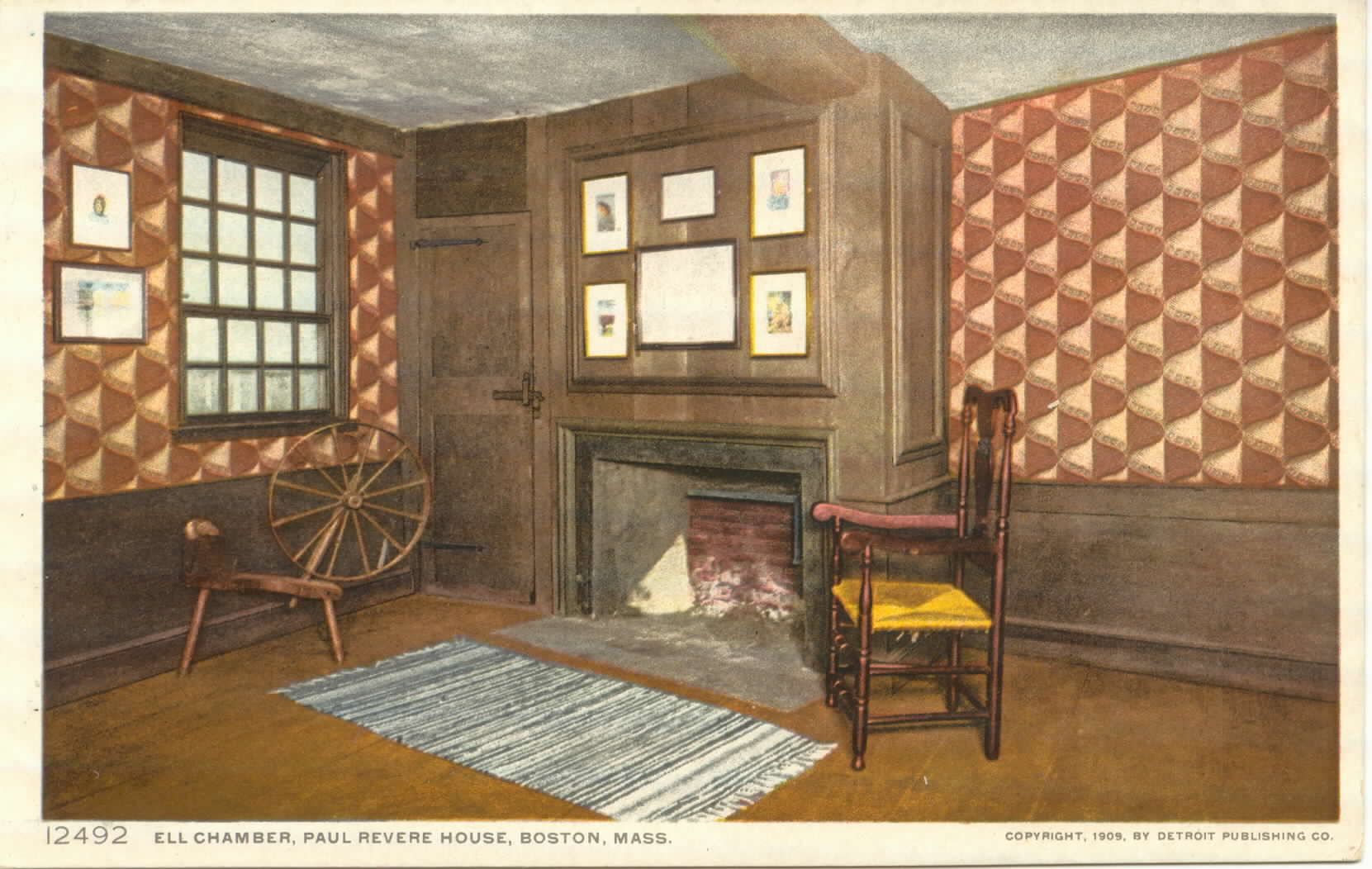
Early preservationists raised money to purchase and preserve the home as a historic site. Its heavy beams, large fireplaces, and absence of interior hallways are typical of colonial living arrangements. The two chambers upstairs contain several pieces of furniture believed to have belonged to the Revere family. Paul Revere owned this house from 1770 to 1800, although he and his family may have lived elsewhere for periods in the 1780s and 1790s. It is believed that during the Revere occupancy the rear chimney was added (c. 1790) including the kitchen that visitors see in the first room they enter.
Weird and Wonderful Museums to Visit in the United States
The Bunker Hill Monument is a major commemorative obelisk, memorializing a key battle during the outset of the Revolutionary War. Climb (no elevator) the monument's 294 steps to the top for a spectacular view. Visit the nearby Bunker Hill Museum for exhibits about the battle, the building of the monument, and the history of the Charlestown neighborhood.
"Puritans" and Others in 17th-Century Boston - GBH News
"Puritans" and Others in 17th-Century Boston.
Posted: Fri, 25 Aug 2023 20:10:38 GMT [source]
L.A. Storyhood
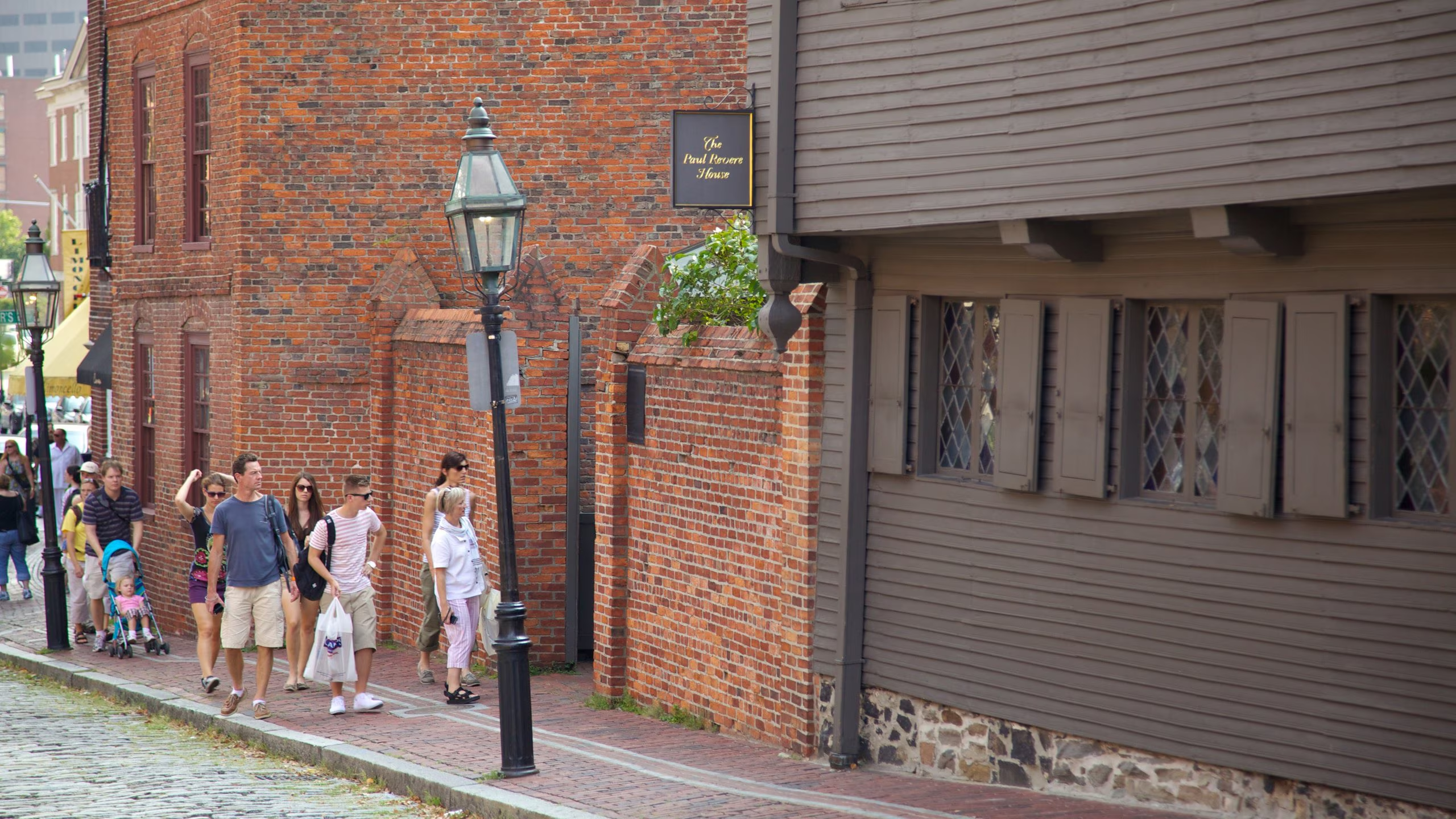
As is typical of early Massachusetts Bay timber construction, the main block of the three-story dwelling consisted of four structural bays demarcated by heavy framing posts and overhead beams. The larger ground-floor room in this main block was dominated by its chimney bay and adjoining lobby entrance. Although some contemporary Boston houses had separate kitchen buildings, the two-story extension behind the Revere House was typical. As the Revere House was set quite close to neighbors, its double casement windows were installed in the rear elevation rather than the more common placement in a gable. To accommodate visitor capacity, interpretive signage is reduced or removed by season.
Designation
Revere next stopped at his home to collect his boots and overcoat before friends rowed him across the Charles River to Charlestown. It was a daring move, as the British had forbidden night crossings of the river. Once in Charlestown, Revere borrowed a horse and sped to Lexington and Concord to warn of the pending attack. These included clay tobacco pipe fragments, buttons, a pierced cowrie shell, and even leather shoe parts. The Office of Public Archaeology at Boston University conducted an archaeological survey of the Revere House in 1983.
Founded in 1794, the group was an organization of artisans and small businessmen who sought to improve the conditions under which their peers worked, and aided members in “distressed” circumstances. Revere also served as Suffolk County Coroner for several years in the 1790s, and as President of Boston’s Board of Health in 1799 and 1800. Accused of cowardice and insubordination, Revere was unhappy with the results of a Board of Inquiry, which did not rule on his case one way or the other.
Paul Revere owned the home from 1770 to 1800, although he and his family may not have lived here for most, if not all, of the 1780s. After Revere sold the home in 1800, it soon became a sailor’s boarding house. By the second half of the 19th century, the house had become an immigrant tenement and the ground floor was remodeled for use as shops. At various times a candy store, cigar factory, Italian bank, and vegetable and fruit business could be found in the house.
Between the 1850s and the 1880s, these were largely Irish people. After this, the ethnic make-up of the North End shifted to Eastern European Jewish and Italian immigrants. The house functioned as a tenement building and housed various shops on the first floor in the last part of the 1800s and early 1900s. In 1902, the house was acquired by a Revere descendant and, in 1907, the Paul Revere Memorial Association was formed.
We reserve the right to refuse admission or ask visitors to leave if they do not follow our health and safety guidelines. Real Estate Newswire is a service provided by United Robots, which uses machine learning to generate analysis of data from Propmix, an aggregator of national real-estate data. Williams' business records (letters, drawings, photographs) are stored at the headquarters of Broadway Federal Savings in Watts.
The house was built in 1969 and the living area totals 1,812 square feet. The house was built in 1992 and has a living area of 1,232 square feet. The sale of the detached house at 12 Patton Drive, Ewing, has been finalized. The house was built in 1951 and has a living area of 1,400 square feet. The house was built in 1949 and has a living area of 1,286 square feet.
(1942 AIA document) Johnson, a Pasadena architect, is noted for designing luxury homes. His revival residential designs with patios, loggias and courtyards aim to create a "true California style" appropriate to the climate and way of life. (California Southland, Sept. 26, 1926) Williams' work is influenced by these ideas. Paul Revere Williams is one of the most prominent architects in California, if not the United States.



No comments:
Post a Comment